Engine, Transmission, Differential, Oil & Coolant Leak Inspection
A leak often starts as a light seep and ends as low oil or coolant and an expensive repair. We inspect the accessible areas from above and below the vehicle for oil and fluid traces, locate them approximately and classify them as dry, light seep, active leak, or old traces that need cleaning and a re-check.
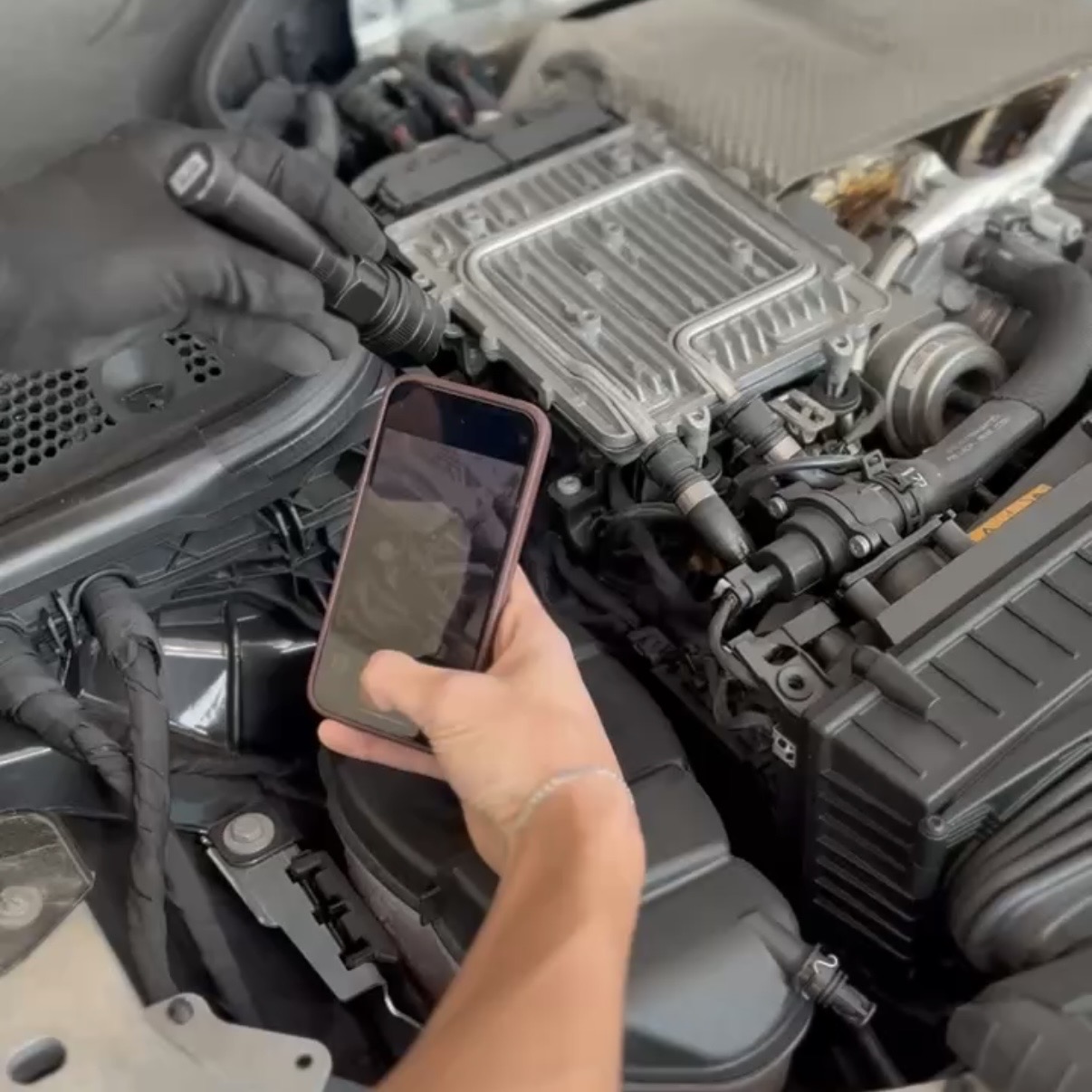
Engine leak inspection
We look for oil traces across the accessible areas around the engine.
- The engine-to-gearbox joint, for rear main seal traces or leaks around it.
- Engine front and timing cover.
- Valve cover and its gasket.
- The outer joint between cylinder head and block.
- Engine block.
- Crankcase / engine oil pan.
- Oil filter housing and surrounding connections.
- Engine oil cooler, where visible.
- Visible seals and fittings.
- Oil traces around parts that were opened or repaired before.
Gearbox leak inspection
We inspect the gearbox housing, fittings and visible seals.
- Gearbox housing and casing.
- Transmission oil pan.
- The area between engine and gearbox.
- Visible gearbox seals.
- Transmission cooler.
- Cooler lines and fittings.
- Old oil traces or active leaks.
- Transfer case leaks on four-wheel-drive vehicles.
Differentials and drivetrain
We review the accessible drivetrain parts from underneath.
- Front differential, where fitted.
- Rear differential.
- Differential cover and housing.
- Pinion seal and visible axle seals.
- Driveshaft connection points.
- Boots and rubbers around the driveshafts.
- Any oil traces around underbody parts or mounts, depending on the vehicle.
Coolant leak inspection
We look for dry or active coolant traces.
- Radiator.
- Coolant expansion tank.
- Radiator hoses and pipes.
- Connections and clamps.
- Thermostat housing, where visible.
- Water pump and its surroundings, where accessible.
- Dried or coloured coolant residue.
- Radiator water leaks.
- Connections linked to the transmission cooler.
- Hydraulic steering fluid, where the vehicle uses that system.
How we classify a leak
We use a clear classification so you can judge how serious each finding is.
- Dry: no visible traces at the time of inspection.
- Light seep: slight traces around a gasket or joint with no visible dripping.
- Active leak: wet fluid or visible drops.
- Old traces: dried residue that may need the area cleaned and re-checked to confirm the source.
What the customer receives
The inspection is visual and non-dismantling and describes the vehicle's condition at the time of inspection. Some light or hidden leaks may require engine cleaning, a pressure test, or dismantling in a specialised workshop to confirm the final source.
- Photos of the visible leak or seep locations.
- The part or area the leak appears to come from.
- The leak status classification.
- The inspector's notes.
- Recommendations for parts needing follow-up or a workshop check.
Frequently Asked Questions
Can every leak be identified without dismantling?
Visible leaks and traces can be identified, but some hidden leaks require cleaning, a pressure test or dismantling in a workshop.
What is the difference between a seep and an active leak?
A seep is light moisture or traces around a joint, while an active leak appears as wet fluid or clear drops.
Does no visible leak mean no future problem?
No. The report reflects the condition at the time of inspection only; some leaks appear only after driving or once the engine heats up.
This is a standalone specialised inspection for AED 300 and is not a replacement for the full vehicle inspection. AED 50 distance fee applies to Abu Dhabi, Al Ain, Ras Al Khaimah, Fujairah and Umm Al Quwain.
Ready to inspect your car?
Find the source of the leak before it turns into an expensive repair.